Notice
how the drooping branches
of this young rimu tree sway in the
wind, like seaweed in an incoming tide.
Seven thousand years ago, the island-hopping Yami ancestors of
Maori, on the island of Formosa (Taiwan),
gave the name omot
to seaweed on rocks at low tide. Their descendants who sailed to
Philippines
4000 years ago modified this to lumot.
And they kept this name as they migrated to
New Guinea.
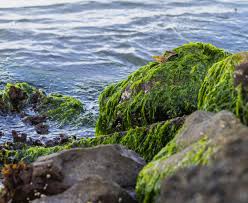 But in the Solomons seaweed became limu, and it kept that name in Samoa and Tonga. Then in Tahiti, Tuamotu and the Cook Islands, they lowered their tongues a little, rolled them like Scottish do, and called seaweed rimu. 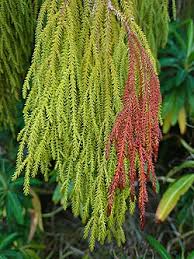 When
colonists from
the Tahitian
and Cook Islands
arrived in
Aotearoa, they found it covered in huge trees with
branchlets drooping down and swinging back and forth
just like seaweed, so they named these trees.... rimu! When
colonists from
the Tahitian
and Cook Islands
arrived in
Aotearoa, they found it covered in huge trees with
branchlets drooping down and swinging back and forth
just like seaweed, so they named these trees.... rimu!
800 years old By giving way to the wind, rimu trees can withstand strong gales, and thus grow high above the forest's broadleaf trees, such as kamahi, that get blown over in gales. This allows rimu to keep growing ever higher for hundreds of years. The ancient rimu trees shelter the broadleaf trees from gale-force winds, while the broadleaf trees shade the ground around the rimu from the hot sun, and help keep the rimu's roots moist. KIDS Did you know that you can eat the cones of Rimu trees? TEENAGERS You can follow the 7000-year migration routes of the Maori people's ancestors by the gradual change of the word lumot to rimu on this MAP. Touch the dots. How many stone tools do you think were sharpened, how many voyaging waka were built with with them, how many pandanus sails hand-woven, to get from Formosa to Aotearoa? MAORI HERITAGE Learn to sing this haunting waiata tangi Rimurimu. HOME
Draft webpage by John Archer, Nov 25 - Jan 2026 Contact
me if you would like this page modified.
Copy and print this QR sign for your own forest or class project.  |
|||